
Who controls your .ca domain when the designer leaves?
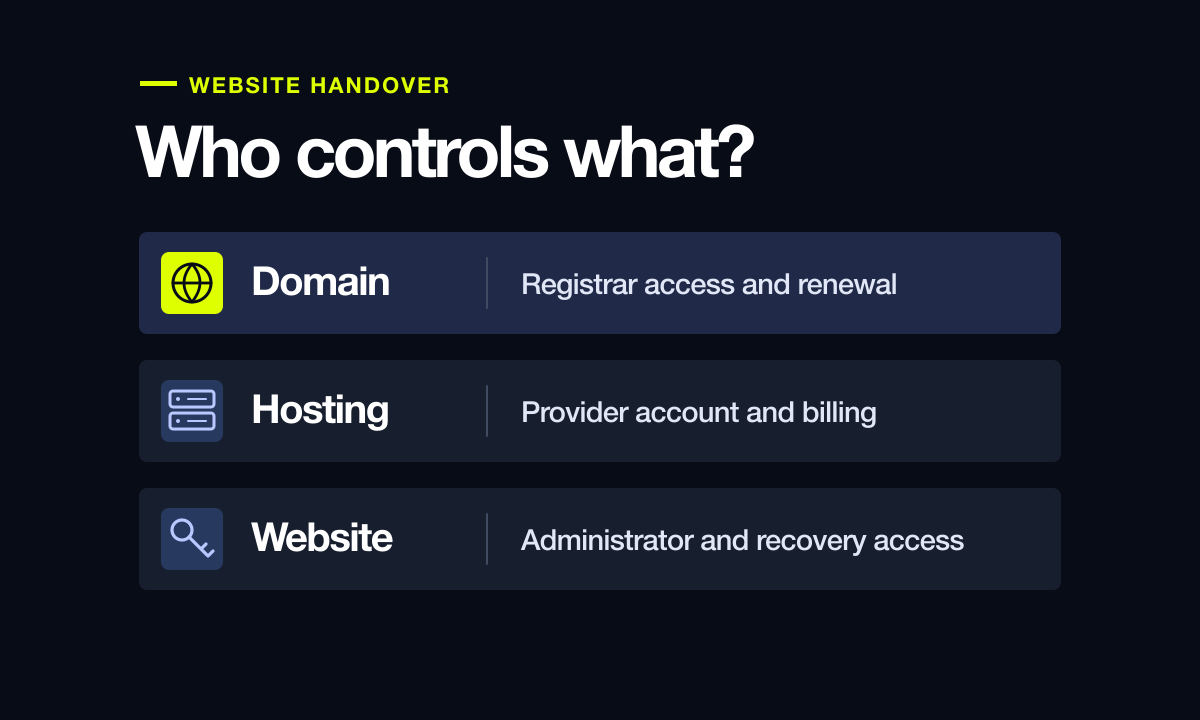
Separate the web address, website and email into three records. Then test whether your business can reach each account without the person who built the site.
Suppose a Pickering sign shop has printed its .ca address on 200 job-site boards. The owner pays a designer every year for “the website” but has never seen a renewal notice. Before ordering new boards, the owner wants to answer a simple question. If the designer retires, can the shop keep using that address?
The fastest way to find out is to trace the renewal and the accounts attached to it. A working website and a paid invoice tell you little about who can make the next change.
Look up the registrar and read the account
For a .ca address, start with CIRA’s WHOIS lookup. It can identify the registrar and show registration dates. Public results hide the personal information of individual registrants. A blank name there is a reason to check the private account.
Sign in at the registrar and find the registrant, administrative contact, renewal date and payment method. The registrant is the individual or organisation named on the registration. Ask the registrar how to correct the record if an old agency or former employee is listed instead of the intended registrant.
Give each service its own line
One company may supply several services, or the designer may coordinate three providers. Write a short record for each and keep passwords in the business password manager. The inventory itself only needs account names, contacts and renewal details.
- Domain registration and DNS. Record the registrar, the account that manages DNS records, the renewal date and the person responsible for payment. DNS connects the domain to services such as the website and email.
- Website hosting and files. Record the host and account owner. Ask what you can export, who holds a usable copy, what content or licences can move, and what the written agreement says about transfer costs.
- Business email. Record the provider, billing account and business administrator. Have a second authorised person locate the recovery method. A designer who edits your homepage rarely needs access to your inbox.
Test the handover without moving anything
For the sign shop, a good rehearsal takes two people. The owner signs in to the registrar with their own account. A manager locates the renewal receipt and confirms who will receive future notices. They also confirm where to request an approved change to the website and who can add a new staff mailbox.
If the same .ca mailbox receives every recovery message, consider a separate recovery address the business controls and check that it is current. Enable multi-factor authentication where available and store recovery codes securely. Record the month someone last tested access.
Know which change you are requesting
Changing website designers, changing registrars and changing the registrant are different requests. A new designer may only need delegated website access. If the business chooses a different registrar for a .ca domain, CIRA explains the transfer procedure, including an authorization code from the current registrar and a check on the domain lock. Follow your providers’ process during the agreed transfer window.
A completed handover ends with a practical test. The business can sign in, explain who bills for each service and reach the person who can restore it. Write that information down before the final invoice is filed away.
See Done48’s hosting and ongoing support options