
Can your private dining room seat 18 at one table?
Turn the questions your events manager answers on every tour into a private dining page a host can send to the whole group.
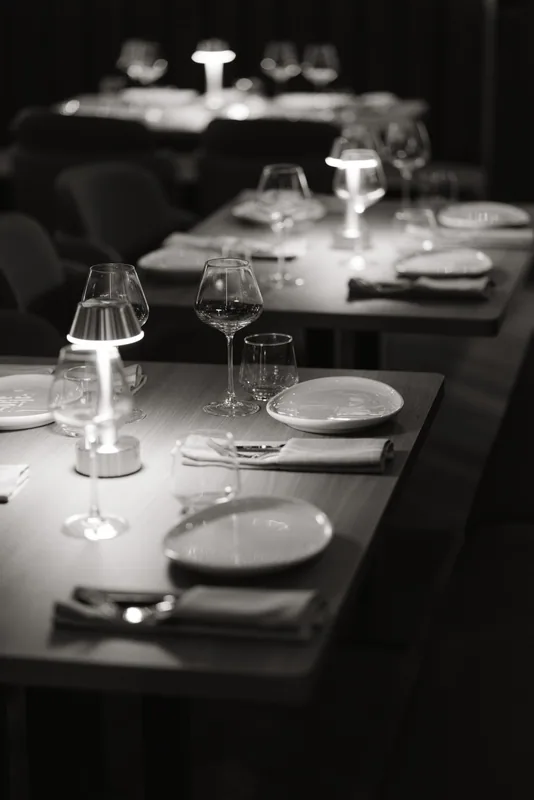
“Seats up to 24” leaves an anniversary host with a surprisingly difficult decision. Can everyone sit at one table? Will other guests hear the speeches? Where does a high chair fit? The details that seem obvious when you stand in the room are invisible on a restaurant website.
Give private dining a page with its own photographs, sample menus and enquiry form. Anyone organising a meal at your restaurant should land directly on the room they might book. Keep the delivery and pickup menus linked from your catering page.
Photograph the room set for a real headcount
Stand in the doorway and photograph the whole room. Add a second view from the far end showing the entrance, screen or nearby bar. Caption each photograph with the arrangement and number of seats shown. A close-up of glassware can wait until visitors have seen the space.
For a fictional room, the caption might read, “Eighteen at one long table. For 19–24 guests, we split the group between two tables. The sliding door closes for speeches.” Publish the configurations your team can actually serve. Include a simple floor plan if a host needs to see the distance between tables, the washroom route or the step at the entrance.
Put the deal beside the menu
Show one current group menu in readable text. Name each course, explain whether guests choose in advance or at the table, and identify what costs extra. Put any room fee, minimum food-and-beverage spend, service charge and deposit information alongside it. Show the hours those terms apply and how the estimate changes if the headcount drops.
A useful test is whether two hosts could independently estimate the same dinner from the page. If they disagree about whether drinks count toward the minimum or a room fee is added on top, give that line another edit.
Explain the local details that can change the evening
The Princess of Wales and Royal Alexandra theatres sit a block apart on King Street West. A nearby Toronto restaurant can ask pre-theatre groups for a departure time and offer the menu its team can serve within that window. Promise a finish time only after the group’s arrival and service details are confirmed.
In Richmond Hill’s historic village, the main shopping and dining corridor runs along Yonge Street north of Major Mackenzie. If your event guests enter from the rear of a Yonge Street building, pin that entrance in the confirmation. Describe the actual drop-off point and the route to the room so the organiser can forward the directions.
Give the events manager a usable first enquiry
- Ask for a preferred date, an alternative, party size, seated or standing format, and the approximate budget.
- Give the host one place to note a speech, screen, cake or firm departure time.
- Explain who confirms availability, whether a date can be held, and what is required to reserve the room.
Explore Done48’s restaurant website design